
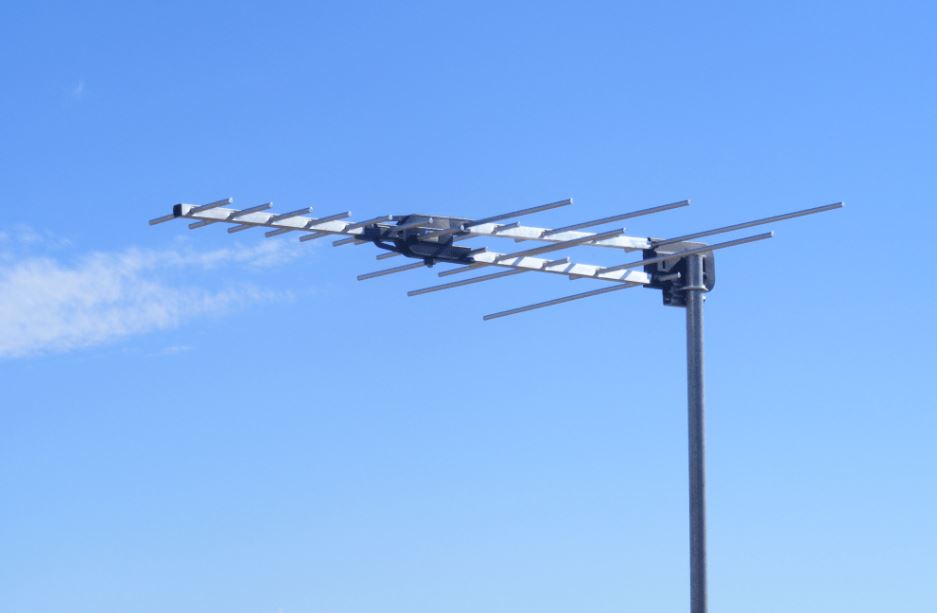
Television broadcasting is called terrestrial broadcasting. A signal is transmitted by a TV station to the surrounding space using electromagnetic waves, and anyone can pick up this signal using a television antenna. You can opt for an indoor or outdoor TV antenna. Most people prefer outdoor antennas because of their strong signal reception.
You should learn more about these devices before buying one that will offer quality service. Broadcasting is carried out on meter (MV/VHF) and decimeter (UHF) waves. Terrestrial television is becoming a convenient and accessible way to deliver a high-quality television signal.
 The DVB-T2 standard is adopted as the main format for digital terrestrial TV. Apart from the Indoor vs. Outdoor antenna classification, you should consider several other factors before buying one. They include:
Antenna Specifications
An antenna, like any electronic device, has several parameters and technical characteristics. Some of them are described in the product passport, some – only in technical conditions. It is unlikely that the average buyer needs all these numbers. The only technical characteristic that a consumer should pay attention to is the antenna gain. It is measured in decibels (dB). The higher the value, the better the antenna’s ability to amplify the TV signal.
But as mentioned above, not always a large gain will lead to a better image. The gain must correspond to the installation site of the antenna! Sometimes unscrupulous manufacturers or sellers indicate sky-high gains on the packaging and in the product passport that have nothing to do with reality. If numbers above 40–45 dB are indicated on the antenna, this product should be treated very carefully. And if you see 80, 90, 120 dB – you are almost certainly misled. Do not buy!
Build, Install and Configure
The purchase of an antenna is not all that is needed for high-quality reception of television signals. The antenna must be properly assembled, correctly installed, connected, and configured. The assembly is usually described in detail in the product passport or on the packaging. Read the instructions carefully before starting assembly.
 If in the instructions you see a clumsy machine translation, errors and inaccuracies, poor-quality and incomprehensible illustrations – refuse to purchase such an antenna! The installed antenna must be connected to the TV. This is done using a coaxial cable, which is usually purchased separately. For television antennas, use a cable with a characteristic impedance of 75 ohms.
Know Your Needs
Often the buyer finds it difficult to choose a suitable television antenna. Here, it is necessary to determine for what tasks the antenna is purchased and what conditions it will work. Selecting an antenna based on its appearance can lead to dissatisfaction with poor quality images on the TV screen. If we are talking about the reception of a small number of channels, then we can restrict ourselves to the choice of a room antenna in the budget segment.

